

The news channels are running red tickers, your portfolio app shows a loss for the first time in months, and a colleague says he has stopped his SIPs “until things settle”. If you invest in equity for long enough, this moment will come many times. Here is how to think about it.
First, how normal is a 10% fall?
Very normal. Indian equity has seen falls of 10% or more many times in the last thirty years, and occasionally much deeper ones:
- 2008: the Nifty 50 fell about 60% from its January peak by October, during the global financial crisis. It took nearly three years to regain the old high.
- 2020: the Nifty fell from about 12,360 in January to about 7,600 in March — roughly 38% — as Covid lockdowns began. It was back above its January high by November the same year.
- Between these big falls there were many smaller ones of 10% to 20%, most of which are hardly remembered today.
Falls are the price of equity’s higher long-term returns. If shares never fell, they would pay no more than a fixed deposit.
What a fall does to a SIP
A SIP invests the same amount every month. When prices fall, that amount buys more units. Look at a simple year in which a fund’s NAV falls from ₹100 to ₹70 over six months and then climbs back to ₹100:
| Kept the SIP going | Stopped after 5 months | |
|---|---|---|
| Invested | ₹1,20,000 | ₹50,000 |
| Units bought | about 1,409 | about 559 |
| Value when the NAV is back at ₹100 | ₹1,40,900 | ₹55,900 |
| Gain | ₹20,900 (17%) | ₹5,900 (12%) |
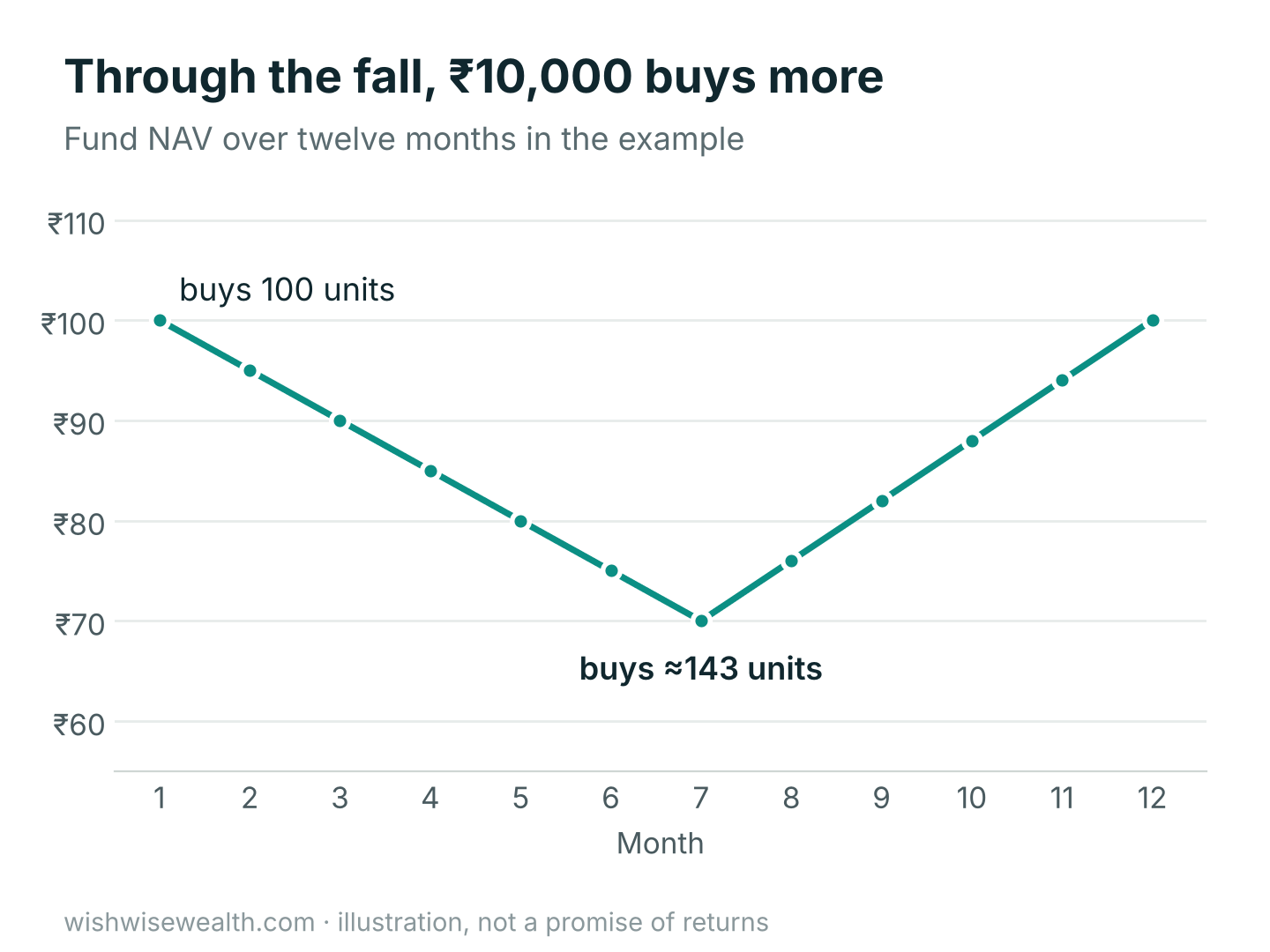
The market ended exactly where it started — a 0% return — yet the investor who kept going made 17%, because the cheapest instalments bought the most units. The one who stopped missed precisely the months that would have helped most.
The costliest mistake: stopping or selling
Stopping a SIP in a fall feels prudent. In practice it locks in the expensive units you bought near the top and skips the cheap ones. Selling is worse: it turns a temporary fall in value into a permanent loss of money, and it leaves you with the hardest decision in investing — when to get back in. Most people who sell in a panic return only after prices have recovered.
A five-step checklist for the next fall
- Check the goal date, not the headlines. Money needed in ten years does not care about this month. Money needed in the next one to three years should not have been in equity in the first place — move it to safety gradually as goals approach, not in a panic.
- Keep every SIP running. If cash is tight, reduce the amount rather than stopping, and restore it as soon as you can.
- Look at your emergency fund. If it is in place, you do not need to touch your investments whatever happens to your job or health. If it is not, build it now — from savings, not from equity at a loss.
- Rebalance if the mix has drifted. If your plan is 60% equity and the fall has taken it to 52%, moving some money from debt to equity brings it back to plan. This is a disciplined way to buy low.
- Add a lump sum only from spare money. If you have savings beyond your emergency fund, a fall is a reasonable time to add — ideally spread over a few months.
What not to do
- Do not check your portfolio every day. Monthly is plenty; quarterly is better.
- Do not switch everything to the fund that fell the least last month.
- Do not move long-term money to an FD “until it is safe”. It will feel safe again only after prices have risen.
- Do not borrow to invest more, however cheap prices look.
Frequently asked questions
What if the fall continues for a year?
Then your SIP buys cheap units for a year. The 2008 fall felt endless at the time; SIPs that continued through it were among the best investments of the following decade.
Should I switch from equity to a hybrid fund now?
If the fall has shown you that you cannot sleep with your current mix, a calmer mix may be right — but make the change gradually and for the future, not as a reaction to one bad month.
Watch real past crashes replay on our crash replay tool, or talk to us on WhatsApp before you change anything.
Figures above are illustrations based on assumed rates of return and are not a promise or guarantee of future returns. Mutual fund investments are subject to market risks, read all scheme related documents carefully. WishWiseWealth is an AMFI-registered Mutual Fund Distributor (ARN-188221).